Vellox logo – Florida-based, veteran-owned engineering company developing SpinG™ power and SpinG™ Nexus™ AI infrastructure

FLORIDA BASED
VETERAN OWNED
ENGINEERING
A MORE RESILIENT WORLD

REMORA™

Electromagnetic Prime-Mover Technology

A new approach to the prime mover for electric power generation.

What is Remora™?

Remora™ is Vellox’s patented electromagnetic prime mover, designed to rotate the shaft of an electric power generator.

Hydroelectric systems use moving water, wind systems use wind, and conventional plants use steam or combustion. Remora™ provides that rotation electromagnetically, combining brushless-motor principles with a flywheel that also acts as an induction rotor. Contactless torque and RPM sensors, a dedicated CPU and an integrated Li-ion battery system provide self-start, monitoring and remote control.

Coupled to an electric generator, Remora™ forms SpinG™ — Spinning Generator.

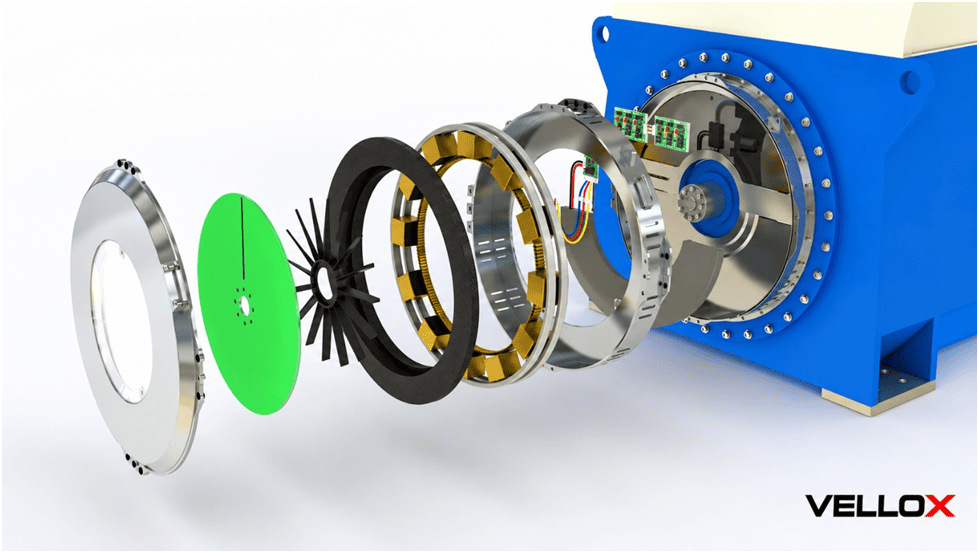
Exploded view of the Remora™ layers: the permanent-magnet flywheel rotor, the stator coil layer and the housing of the patented electromagnetic prime mover

REMORA™ IS NOT A PERPETUAL-MOTION DEVICE.

REMORA™ + ELECTRIC GENERATOR = SpinG™

WHY THIS MATTERS FOR CONTINUOUS POWER GENERATION

STAGE 01

SELF-START

STAGE 02

CONTROLLED TORQUE & RPM

STAGE 03

ONBOARD BATTERY RECHARGE

STAGE 04

SUSTAINED ROTATION

STAGE 05

CONTROLLED GENERATOR DRIVE

Remora™ is designed to maintain controlled torque and rotational speed as a remotely controlled prime mover for an electric power generator.

CONTROLLED GENERATOR SPEED & POWER RESPONSE

PHASE 01

REMOTE RPM CONTROL

PHASE 02

GENERATOR SHAFT SPEED CONTROL

PHASE 03

SPECIFIED OPERATING RPM

PHASE 04

DEMAND-RESPONSIVE POWER GENERATION

Because Remora™ RPM is remotely controlled, the rotational speed of the coupled generator shaft can also be controlled. Remora can be programmed to maintain the generator manufacturer’s specified operating RPM or adjust within the permitted operating range in response to electricity demand.

Where Remora™ Stands Today

ENGINEERING STATUS

Current Development Foundation

  • Patented electromagnetic prime-mover design: Dutch Patent NL2017352 and USPTO-allowed claims
  • Completed engineering designs of the Remora™ assembly, flywheel, stator, CPU and battery-management system
  • Control architecture designed for contactless torque and RPM sensing and remote RPM control

NEXT STEP

Requires Industrial Prototype Testing & Independent Validation

  • Sustained operation under generator load
  • Net energy balance
  • Onboard battery-recharge performance
  • Efficiency
  • Operating duration

SpinG™ projected commercial electricity pricing and performance remain subject to industrial prototype validation.

Technology Designs

Inside Remora™

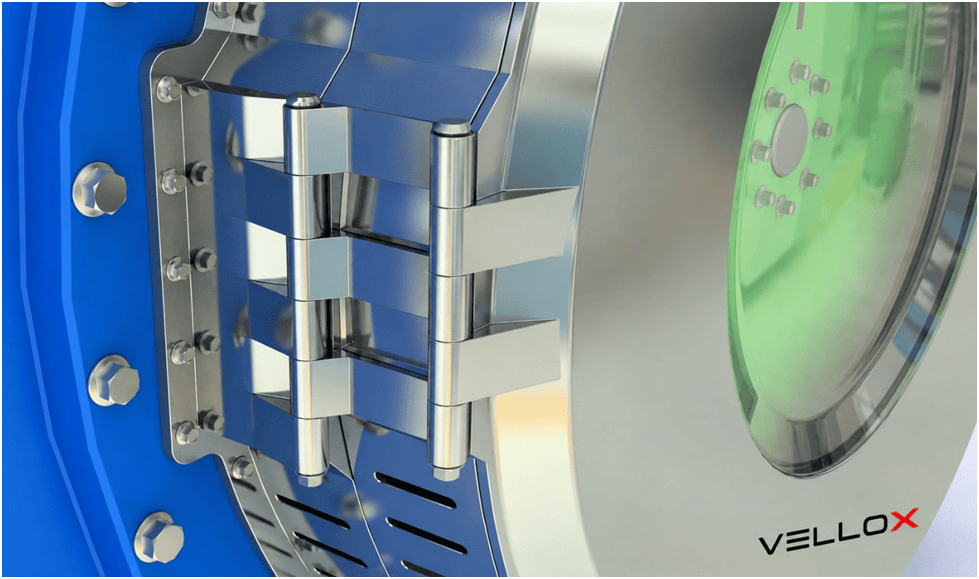
Remora™ design rendering showing the hinged housing layers that open for access to the internal flywheel, stator and electronics

Remora™ — Closed Assembly

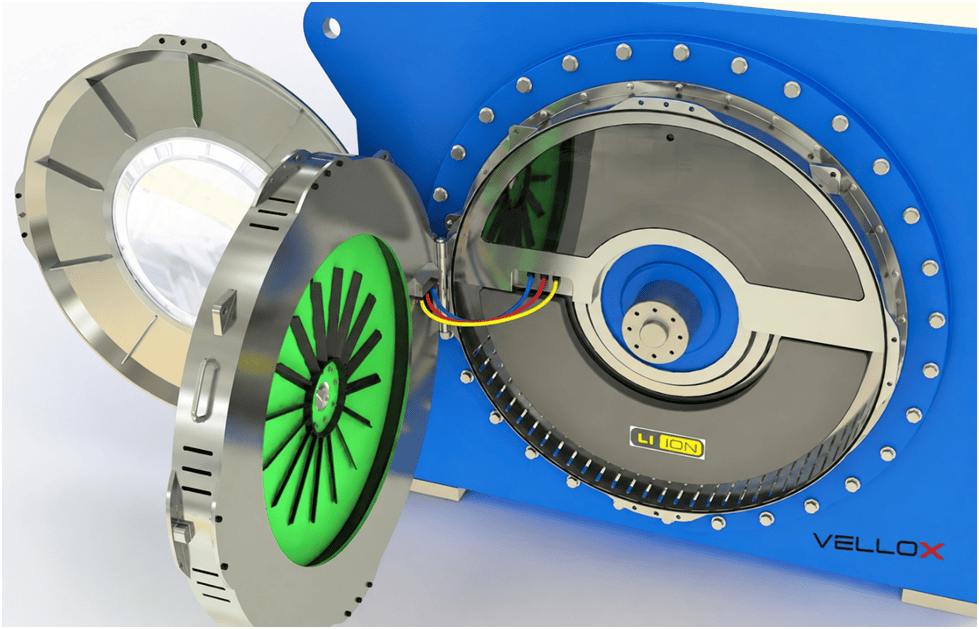
Remora™ opened to reveal the onboard Li-ion battery pack and dedicated CPU control unit inside the prime-mover housing

Remora™ open — Battery & CPU

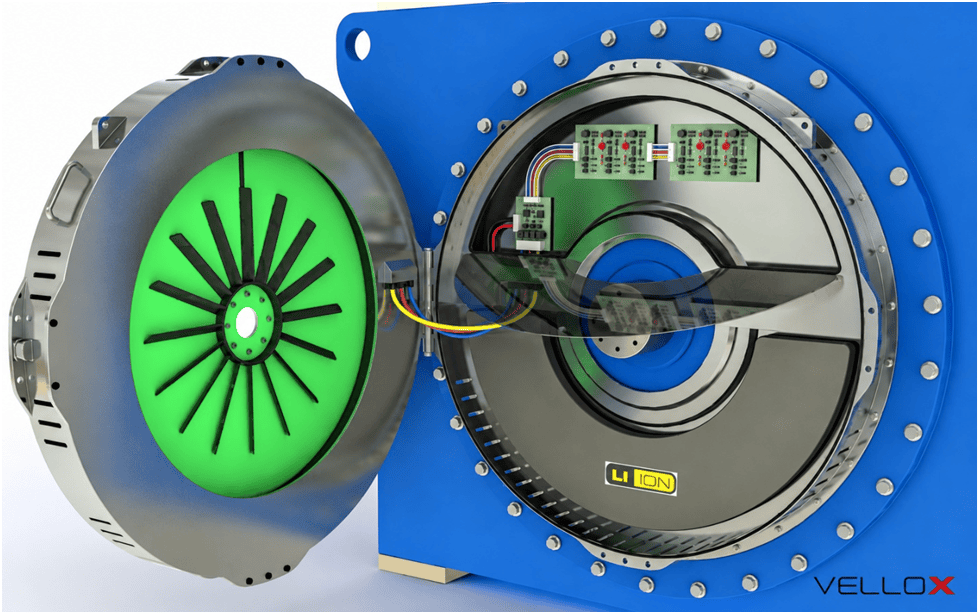
Inside the Remora™ prime mover: CPU and battery management system that control self-start, torque, RPM and energy recovery

Remora™ open — CPU & Battery Management System

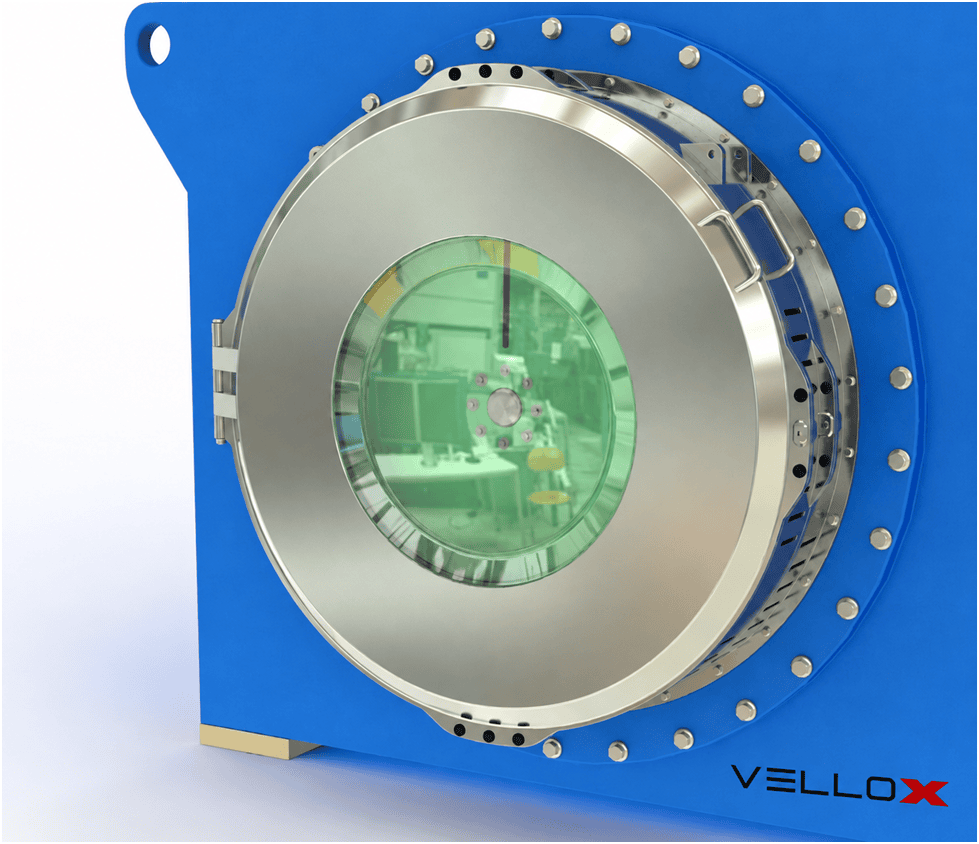
Front view of the closed Remora™ electromagnetic prime-mover housing, the patented Vellox unit that couples to an electric generator to form SpinG™
Remora™ — Layers

Remora™ Rotor Speed & Energy Recovery

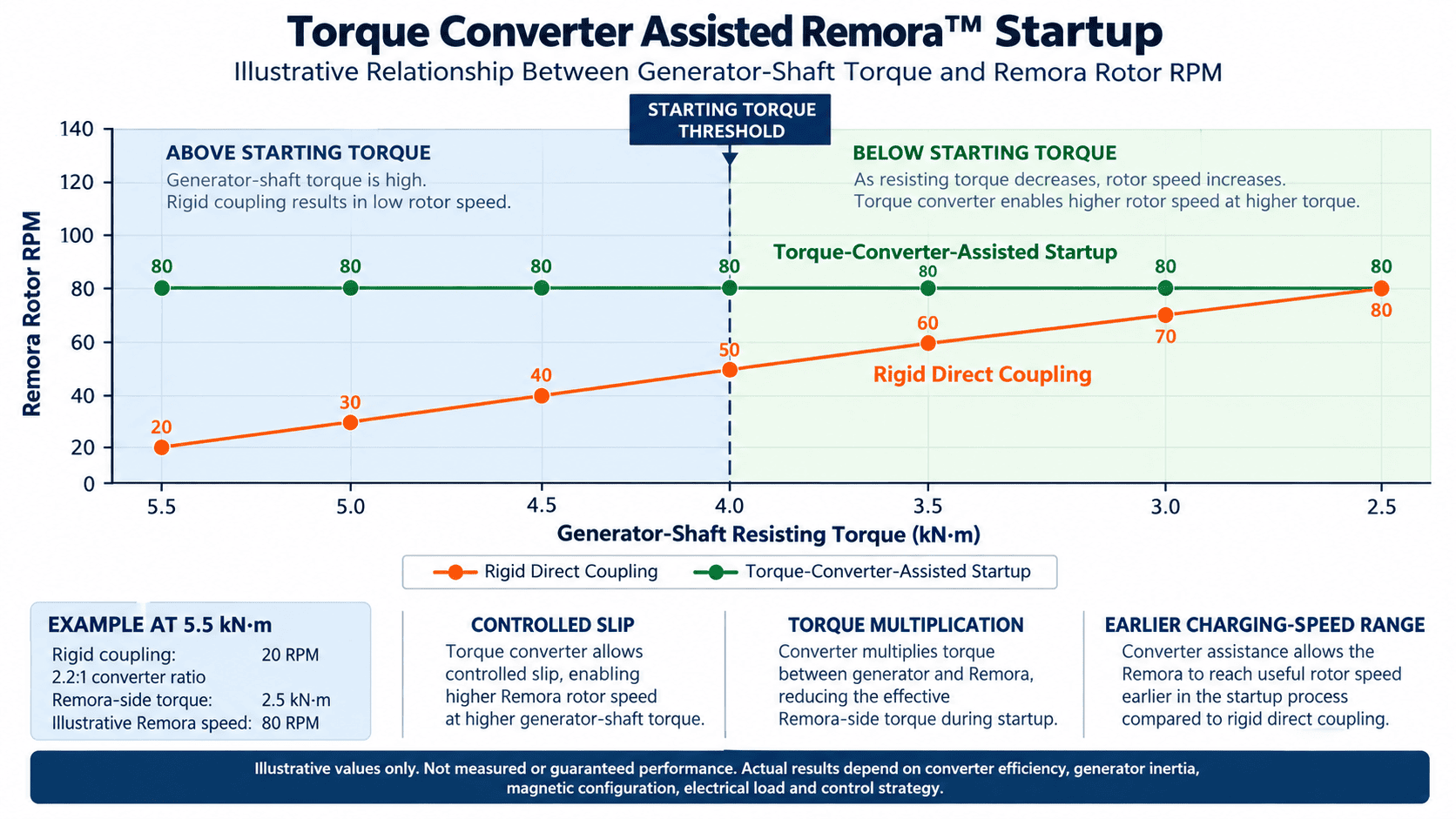
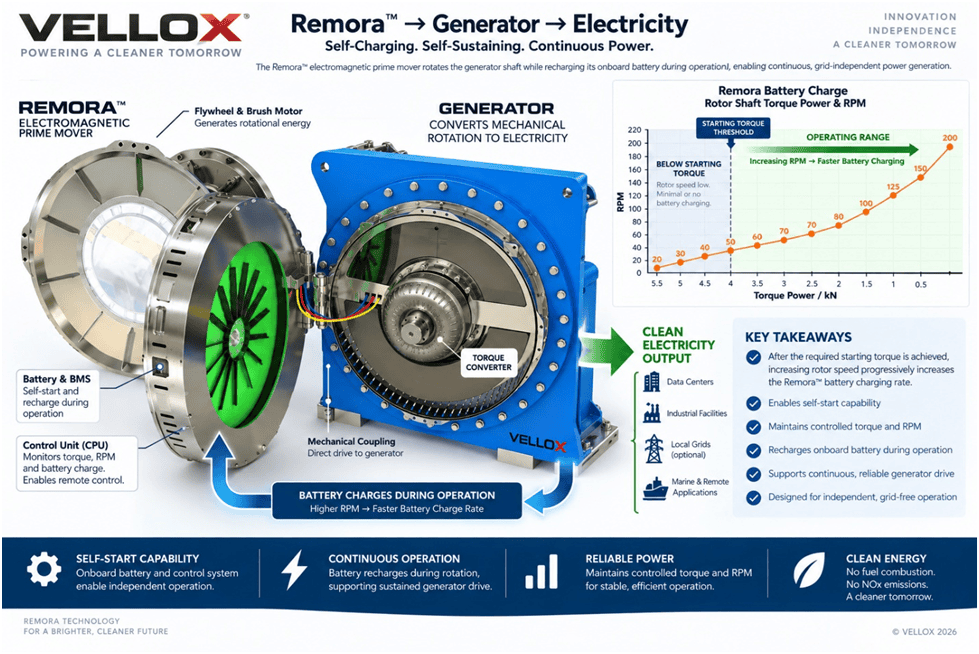
As the Remora™ rotor accelerates, kinetic energy is stored in the flywheel. The architecture is designed to recover a portion of the electrical energy induced by the rotating permanent-magnet flywheel and route it through the power-management system to the onboard battery. A mechanical torque converter on the generator shaft helps manage changing torque and RPM requirements between Remora™ and the generator, with the objective of reducing battery recharge demand.

Net system performance, recharge rate and operating duration remain subject to industrial prototype testing under representative generator loads.

Remora™ energy-recovery diagram showing the flywheel, stator coils and CPU routing recovered electrical energy to the onboard Li-ion battery, with a mechanical torque converter on the generator shaft

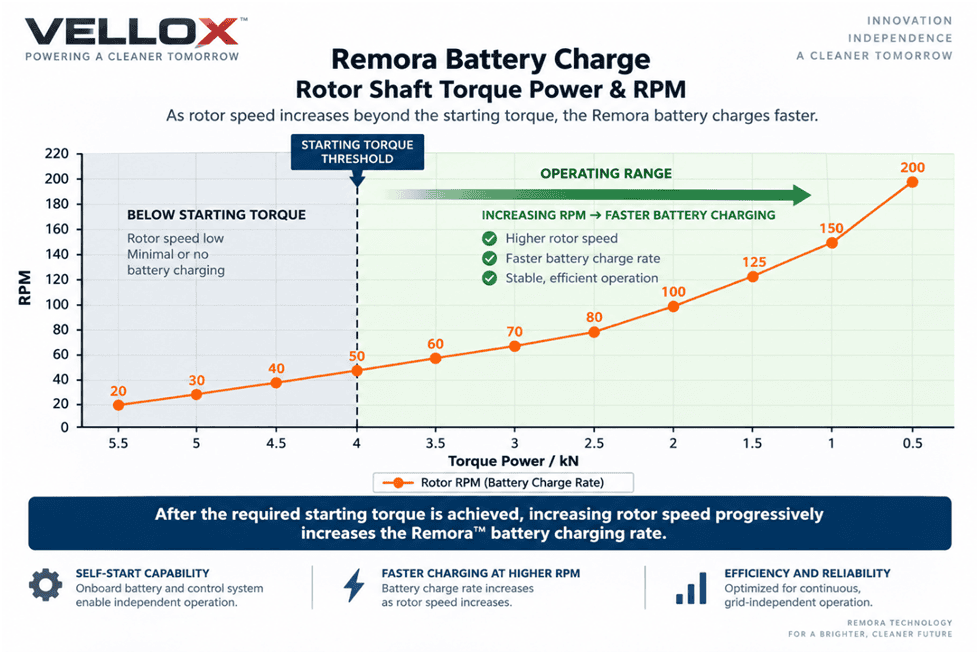
The graph illustrates the designed relationship between increasing rotor speed and battery-charging response during operation. Performance will be quantified during industrial prototype testing.

The relationship between flywheel speed and stored rotational energy is expressed as:

E = ½ Iω²

Where I is the flywheel’s moment of inertia and ω is angular velocity. The energy stored in a given flywheel therefore increases with the square of rotational speed, not simply in direct proportion to RPM.

SYSTEM ARCHITECTURE

Remora™ Integrated Electromagnetic Energy Recovery

Permanent magnets are integrated into the rotating flywheel, and electromagnetic coils into the stationary stator layer. As the flywheel turns, the magnets pass the coils and induce an electrical output, which is managed by the Remora™ CPU-controlled power architecture.

Graph of Remora™ rotor speed versus battery charging response, showing electrical energy recovery increasing as flywheel RPM rises

The graph illustrates the operating transition from high generator-shaft starting torque to progressively lower running torque as RPM increases—the operating region in which flywheel rotational speed and the associated electromagnetic induction also increase.

A New Approach to the Prime Mover

Remora™ is designed to self-start, establish the required starting torque and maintain controlled rotational speed while driving an electric power generator.

The innovation is focused on the prime-mover side of electricity production. Vellox does not need to reinvent the generator, potentially allowing proven commercial generators to be integrated into remotely controlled SpinG™ power systems.

Graph of Remora™ generator-shaft torque versus RPM, showing high starting torque that tapers to lower running torque as rotational speed increases

Independent Academic Research

Vellox’s development of the technology underlying Remora™ dates to its first patent in the Netherlands in 2016. Related flywheel energy-recovery principles were subsequently investigated independently in academic research. A 2022 study by researchers at Sri Ramakrishna Engineering College used MATLAB/Simulink to evaluate a flywheel-based motor-generator architecture, including rotational energy storage, battery charging, energy feedback, and speed/torque behavior. The research was independent of Vellox and did not evaluate Remora™ itself but provides an additional academic reference for several underlying engineering principles incorporated in Vellox’s earlier patented technology.

Meyyappan & Ravichandran, Sri Ramakrishna Engineering College, 2022

DOI: 10.1109/ICEARS53579.2022.9751917

Patented Technology

Remora™ is protected by intellectual property developed and maintained by Vellox, with patent protection originating in the Netherlands and extending through subsequent U.S. patent filings and developments.

EVOLUTION OF KINETIC POWER

From Remora™ to SpinG™

Remora™ is the prime mover at the center of the SpinG™ architecture, providing controlled mechanical rotation to a conventional electric power generator.